

The lineage of Thomson is the convergence of five lines of companies. We will look at them now.
Thomson was named after the electrical engineer Elihu Thomson, who was born in Manchester, England, on March 26, 1853. Thomson moved to Philadelphia, USA, at the age of 5 with his family. Thomson formed the Thomson–Houston Electric Company in 1879 with Edwin Houston. The company merged with the Edison General Electric Company to become the General Electric Company in 1892. In 1893, the Compagnie Franҫaise Thomson‐Houston (CFTH) was formed in Paris, a sister company to GE in the United States. It was from this company that the modern Thomson Group would evolve.
Thomson was early to digital, producing its first Digital Noise Reducer in 1977. In 1986, Thomson demonstrated Le Studio Numérique, the world's 1st full component digital studio. Later, the system was installed at SFP, Paris. In 1992, Thomson introduced a Motion Compensated Standards Converter.
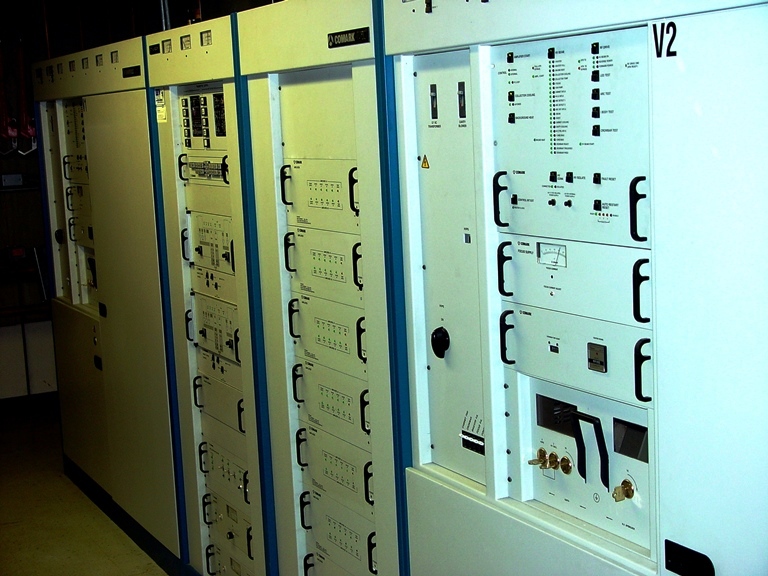
Thomson‐CSF acquired U.S. transmitter vendor Comark Communications, along with Comwave, and formed Thomcast Communications to strengthen its worldwide presence in television transmitters. In the late '80s, Comark was known for pioneering very high‐power television transmitters, using an offspring of the Klystron vacuum tubes that were much more efficient than their ancestors. Comark was selected to supply the transmitting system for the Model HDTV station project.
In the early 90s, Thomcast added Asea Brown Boveri (ABB), a Swiss transmitter and antenna company, to its transmitter portfolio. In 2000, Thomson–CSF divested its military and transmission product lines, creating Thales. Thomcast became Thales Broadcast and Multimedia. In 2003, Thales pioneered the development of Digital Modulator Pre–Correction for ATSC 8-VSB.
In June 1998, in a deal brokered by the French government, parts of Aerospatiale, Alcatel, and Dassault Industries came under the Thomson umbrella. The French state's interest in Thomson was reduced from 58% to 40%, and Alcatel and Dassault Industries became shareholders.

Bosch GmbH was founded in 1886 and made magneto ignition devices for gas turbines and later automobiles. It branched out into other auto parts and became an armaments supplier for Nazi Germany.
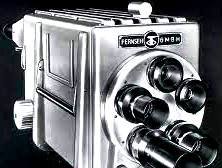
In 1939, Bosch took control of Fernseh, which started in 1929 as a television technology research firm on behalf of others. Fernseh is believed to have created the first remote television truck in 1932. Soon, the combined company was known as Bosch Fernseh. In 1967, the combined company introduced its first color TV.
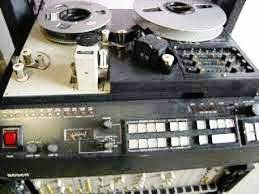
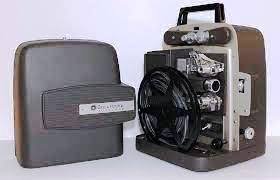
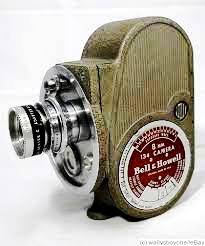
Bell & Howell was founded in 1907 by two projectionists to manufacture film cameras, lenses, and motion picture machinery.

In 1954, KUTV signed on in Salt Lake City. In 1962, a joint venture between the station and the Salt Lake City Tribune, Telemation was founded. It developed and sold a line of industrial-quality, not quite broadcast-quality, television equipment. In 1971, they introduced their first color camera and followed with a color film chain in 1973. In 1974 they offered their first television router.
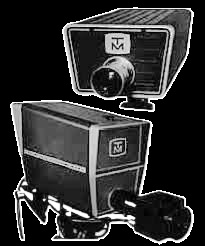
Bell & Howell purchased the company in 1977. In 1979, they entered a joint venture with the Bosch Fernseh Division. In 1982, Bosch fully acquired the venture, renaming the company the Robert Bosch Corporation Fernseh Division.
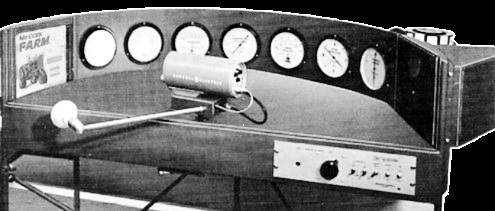
First off, this is a company that had a major impact on pushing two major video innovations forward through its camera offerings. We will see this in a bit.
The Philips Company was founded in 1891, and its first products were lamps. In the 1920s, the company started to manufacture other products, such as vacuum tubes. In 1939, it introduced its electric razor, the Philipshave, which was marketed in the US using the Norelco brand name. What Philips became very well known for in the broadcast industry was its cameras. Its first big hit in the U.S. television market was its groundbreaking PC‐60 color camera, which was introduced in 1964.
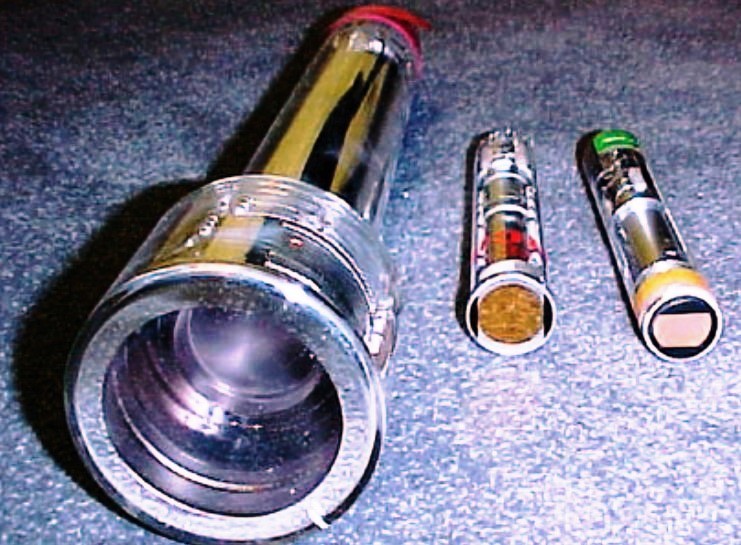
PC stood for Plumbicon Color. The "plumbicon" imaging tube was much more sensitive, smaller, and had a higher resolution than what had come before. 60 stood for the year the Plumbicon was invented. In the U.S., the camera was also sold under the Norelco brand. Yes, the same folks who had been selling electric razors.
An early pioneer in television, Philco, in 1940 claimed that Philips' name was too similar to theirs, and got the FTC to block any products from having the Philips name on them in the U.S. So they set up a subsidiary called NORth American ELectronics COmpany, or Norelco for short. So everywhere else except the U.S., when the Norelco PC‐60 launched, it was known as the LDK‐1. LDK is the Dutch abbreviation of the lead oxide tube, which is what comprised that image target in the plumbicon tube. Finally, in 1981 Philips acquired GTE, which had acquired Philco from Ford Motor. Ford bought Philco in 1961. Philips could now brand itself Philips everywhere.
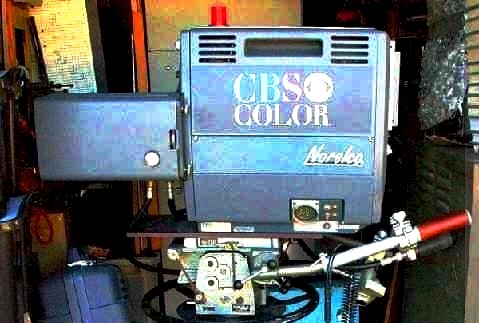
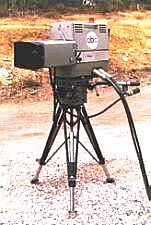
Up until then, both networks were avoiding broadcasting much in color: ABC because it didn't have the money to spend on color equipment. Color cameras were going in the $100K range, in 1960s dollars. Plus, all the ancillary equipment was also more expensive than black-and-white equipment.
CBS's reason was more strategic. While companies such as Marconi were offering color equipment, the dominant player by far was RCA. They had invented all-electronic color and sold most of the color gear at the time. RCA also owned NBC, which CBS deemed their major competitor. CBS was in no mood to indirectly help their competitor. While by 1960 NBC was for all intents and purposes a full color network, CBS had less than a dozen color cameras across the entire network. The reason that CBS used at the time was that they would provide color programs when the advertisers would pay for them. NBC had the luxury and rationale, a generation earlier than we saw with Sony, of producing shows in color to fuel color set sales. At that time, RCA was the dominant home receiver manufacturer, along with being the dominant color production equipment supplier. Much like Sony was in the 80s and 90s.
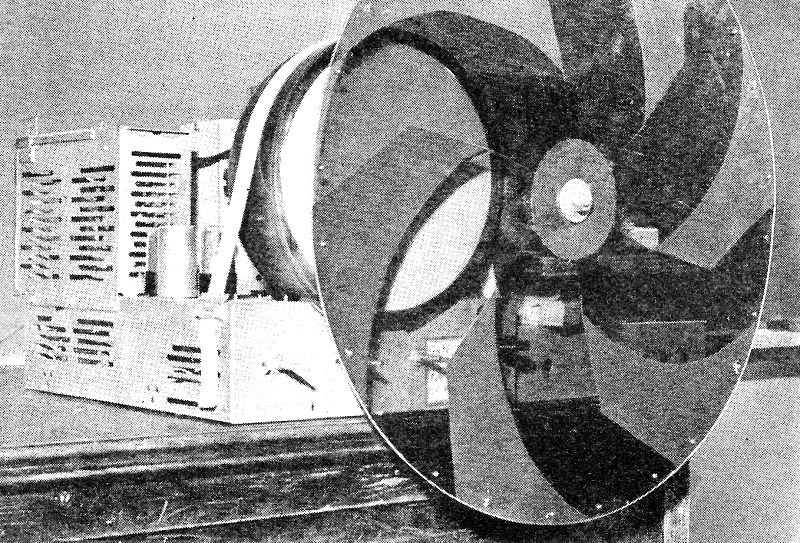
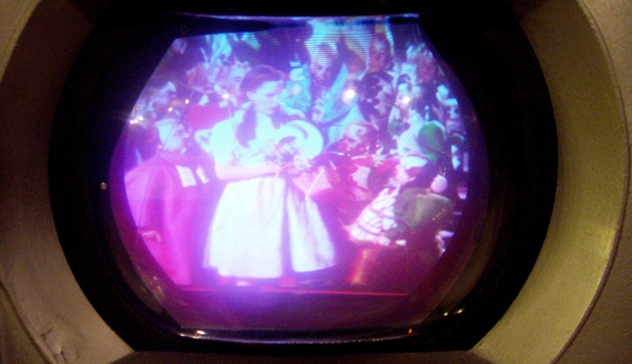
CBS was so against having to buy color equipment that they fought RCA's efforts to standardize color on their system. They even designed a color system that used a spinning "color wheel" or disk as a competitor to RCA's all‐electronic approach. Besides the mechanical attributes, it was a much simpler system electronically. The state of the art in electronics in the early '50s made the CBS approach much more stable. But while RCA's system would not obsolete existing black-and-white sets, CBS's would.
Much to CBS's dismay, the FCC actually adopted the CBS system for a while. That was not CBS's end game. Their real motive was to stymie the RCA system. CBS's rationale was that they had just a few years earlier, during the late 40s, spent an awful lot on RCA black & white equipment, they did not relish having to do that all again on RCA color equipment. For a while, they scrambled to go into the color home receiver business. They were given an out by the start of the Korean War. Ostensibly by request of the National Production Authority "to conserve material for defense" for the duration of the Korean War. CBS announced, almost too quickly some thought, that it agreed and would also drop color broadcasts; color receivers were recalled and destroyed. Only a couple hundred were ever produced. Strangely, monochrome receiver production was not affected. RCA eventually perfected their system enough to release it for sale. Even then, the industry group that standardized RCA's system, the National Television Systems Committee, or NTSC, had some claiming the initials actually stood for "Never Twice the Same Color!"
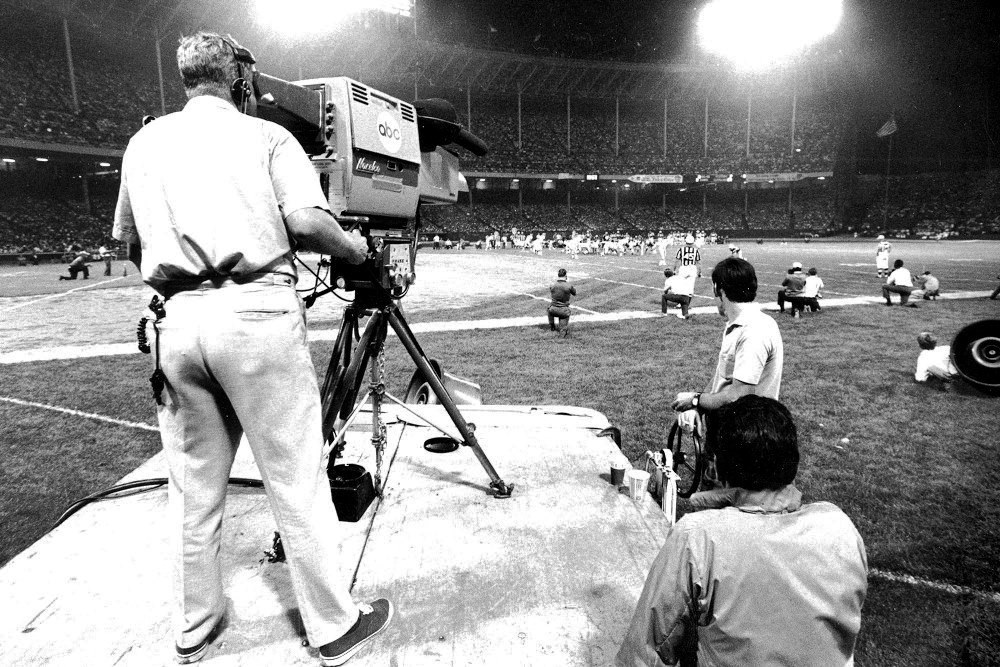
Philips had over 1,000 of their state‐of‐the‐art cameras out in the field by 1968.
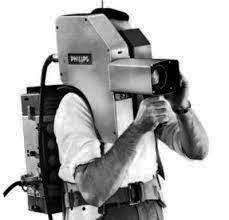
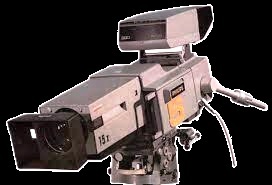
See the other technological leap by Philips


In 1967, Philips acquired control of Pye Ltd, which was an electronics company founded in 1896 in Cambridge, England, as a manufacturer of scientific instruments. The company eventually offered a line of TV sets and television transmitters.
In 1975 their second generation of the LDK series of cameras was introduced. In 1979 the FDL 60 Telecine was introduced. It was the 1st telecine to use CCD sensors. Philip's LDK6, their first totally automatic camera was introduced at NAB in Dallas in 1982.
Over the years, Philips developed a number of firsts found today in high-end cameras. These include "crispening" circuitry that sharpens the transitions in a video signal, resulting in the appearance of a sharper picture. They also pioneered the selective application of such circuitry by controlling the amount of sharpening that was added to flesh tones to hide wrinkles, which they developed in 1993. A big development came in 2000 when they created the HD‐DPM imager technology for CCDs, allowing for the first time a sensor to be set up for scanning in one of several native HD formats.
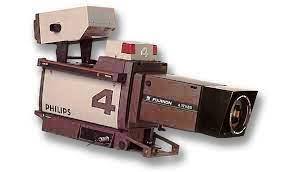
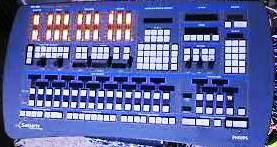

In 1986, BTS, Inc. was formed as a joint venture between Bosch and Philips. The Robert Bosch Video Division, comprised of the Salt Lake manufacturing facility acquired from Telemation, and a sister manufacturer in Germany, was joined with a Philips television camera manufacturing facility in the Netherlands to become Broadcast Television Systems or BTS, Inc. In 1992, BTS became a wholly owned member of the Philips family, retaining the BTS name. In 1992, parts of the Albertville Winter Olympics were covered in HDTV for the 1st time with HDTV OB vans and equipment from BTS.
In 1995, Philip rebranded BTS as Philips Broadcast. Philips Broadcast stayed a brand until 2001 when it was acquired by Thomson Multimedia SA, merging with Thomson's own broadcast division into the Thomson Broadcast and Media Solutions (TBMS) business group. The group's product lines, among many other things, included cameras, routers, switchers, and even VTRs.
In 2004, Parkervision, a Jacksonville, Florida, company was bought for $14 million, adding automated news production systems and robotic camera lines. This added 143 employees to the company, which then had over 73,000 worldwide employees. What Parkervision offered to its clientele was the ability to run a production control room, say during a newscast, with one employee instead of the four or five normally required in a mid–sized market.
In 2004, Thomson set up a joint venture with China's TCL (TTE), giving TCL all manufacturing of RCA and Thomson television and DVD products. This made TCL the global leader in TV manufacturing, while Thomson still controlled the brands and licensed them to TTE. At the time, TCL was hailed as the first Chinese company to compete on the international stage with large international corporations. Thomson initially retained all marketing of TTE's products but transferred that to TTE a year later. Thomson sold the Indian company, Videocon Group, the display manufacturing business for about $250 million. In early 2010, Thomson sold the television brand RCA to ON Corporation.
Next on the menu was Canopus Co., a manufacturer of video editing cards and video editing software, which was acquired in 2005 for $107 million. The company's video cards competed with the likes of Matrox and Pinnacle Systems. In 2003, Canopus introduced their EDIUS nonlinear editing software.

In its quest to cast as wide a net as possible in product offerings, at the end of 2005 it also bought back Thales Broadcast for $155.6 million, which it had sold off earlier. This brought a line of radio and TV transmitters, antennas, and a line of MPEG test equipment into the fold. It also added Nextstream, with compression product lines for telco, cable, and satellite segments.
Together, these acquisitions completed Thomson's two-year plan to enhance its claim as "a worldwide leader in end-to-end systems for distributing multimedia content over broadcast, cable, satellite, and the emerging market for sending video over Internet Protocol, also known as IPTV."
A problem was that there were some product overlap. Both Grass Valley and Philips made production switchers and routers. In fact, Grass Valley's Trinix router was introduced almost at the same time that Philips was developing its venerable line of Venus routers. Also, both Philips and Thomson offered high-end cameras.

Marc Valentin started with Thomson in 1993 as a corporate planner. In '97 he became Chief of Staff, which meant the managing and organizing of Thomson CEO's presentations, management meetings, and management schedule, then moved on to be Vice President, Digital set–top–boxes Europe. In 2002 he became head of the entire company, which interestingly was now called Grass Valley. He was tasked with integrating the former Philips Broadcast business and Grass Valley Group into the rest of the company.
When Thomson had taken over the company, it became known as Grass Valley, a Thomson brand. By 2005, Thomson realized that the Grass Valley brand was stronger than Thomson's, at least in the professional television realm in the States. So the Grass Valley brand was applied to all activities of the division, including the website; www.thomsongrassvalley.com became www.grassvalley.com. All traffic to the former web site was now automatically directed to the new site. While the brand name was as strong as ever, with much-expanded product lines, the namesake of the company was losing its grip on the company.
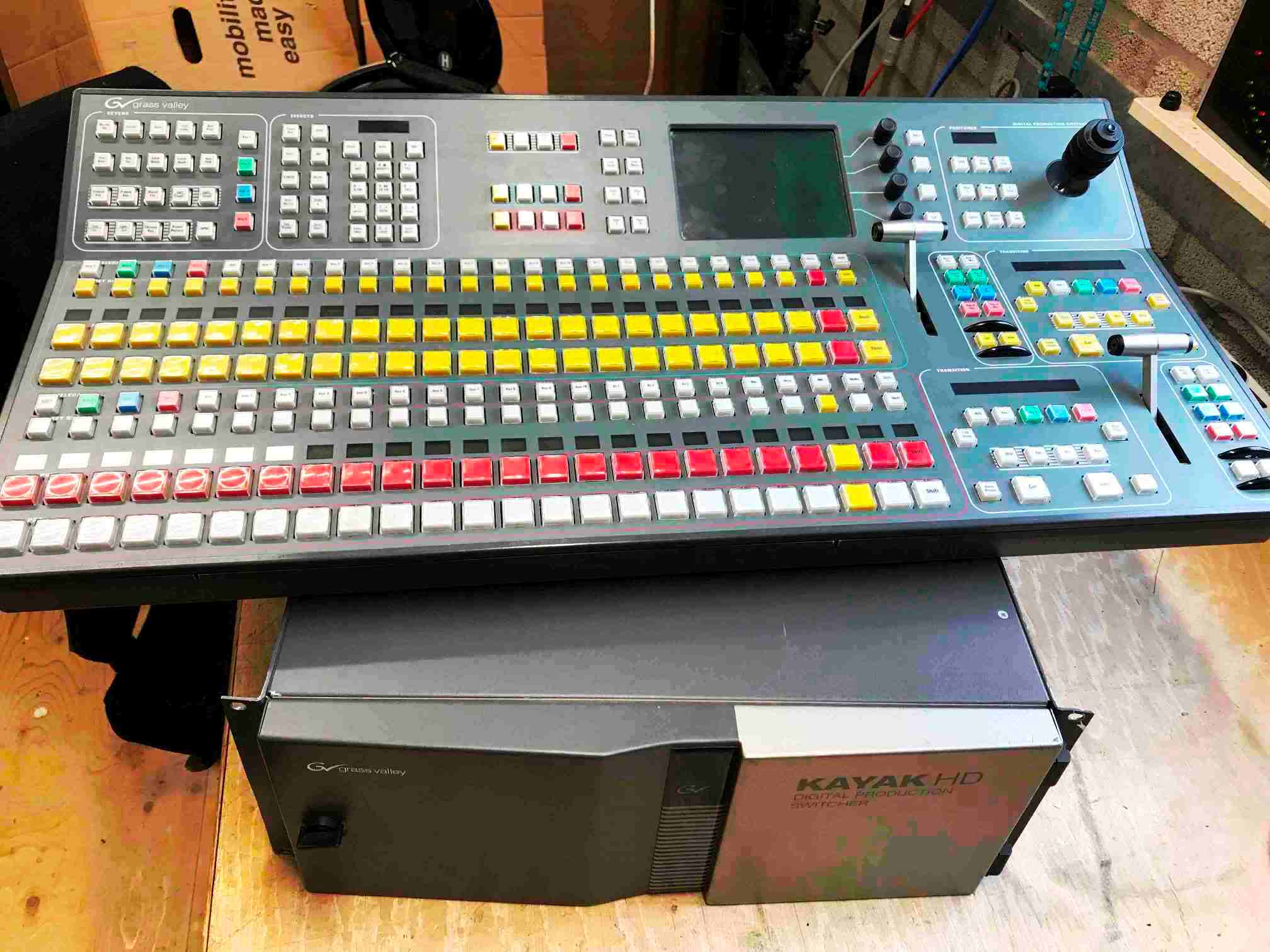
In 2005, Premier Retail Networks (PRN) was acquired by Thomson for $285 million. The company did digital signage for companies such as Walmart. Also in 2005, what many said would never happen, that is up until the Thomson acquisition, a Grass Valley product with a lens hung on the front of it. A Thomson‐Grass Valley camera was introduced at IBC.
In 2006, the Grass Valley Division teamed with Polatis, which was a provider of optical switching products for the communications, video, defense, and instrumentation industries, in an attempt to re–enter the fiber market.
In 2007, the "French conglomerate," as it was often referred to, decided to replace Valentin with Jacques Dunoguè, and realign the structure of the business. Dunoguè was the Senior Executive Vice President in charge of Thomson's Systems Division. At the same time, steps to strengthen and reinforce video networking and systems integration synergies with Thomson's other related businesses were also taken. Grass Valley, with Philips firmly under the GV brand, was organized into three business units: Broadcast & Professional Solutions, Integration & Transmission Solutions, and Video Network Solutions. At that time Jeff Rosica, who had been managing Grass Valley's North American sales and marketing efforts, continued in that role and also led the Broadcast & Professional Solutions business unit, reporting directly to Dunoguè.
On January 27, 2010 while it was trying to sell off assets, Thomson changed its name to Technicolor SA, rebranding the entire company after its US film technology subsidiary. Thomson's US subsidiary became Technicolor USA, Inc. Grass Valley went in July 2010 to the Francisco Partners and PRN that December. It also sold off it's transmission business. Thomson had sold the Grass Valley digital film transfer gear business, inherited from Technicolor to private equity investors in October of the year before.
In 2010, Francisco Partners, a technology‐focused private equity firm, acquired the Grass Valley Broadcast & Professional division from Technicolor. The acquisition was finalized on January 1, 2011, with Grass Valley operating as an independent company thereafter.
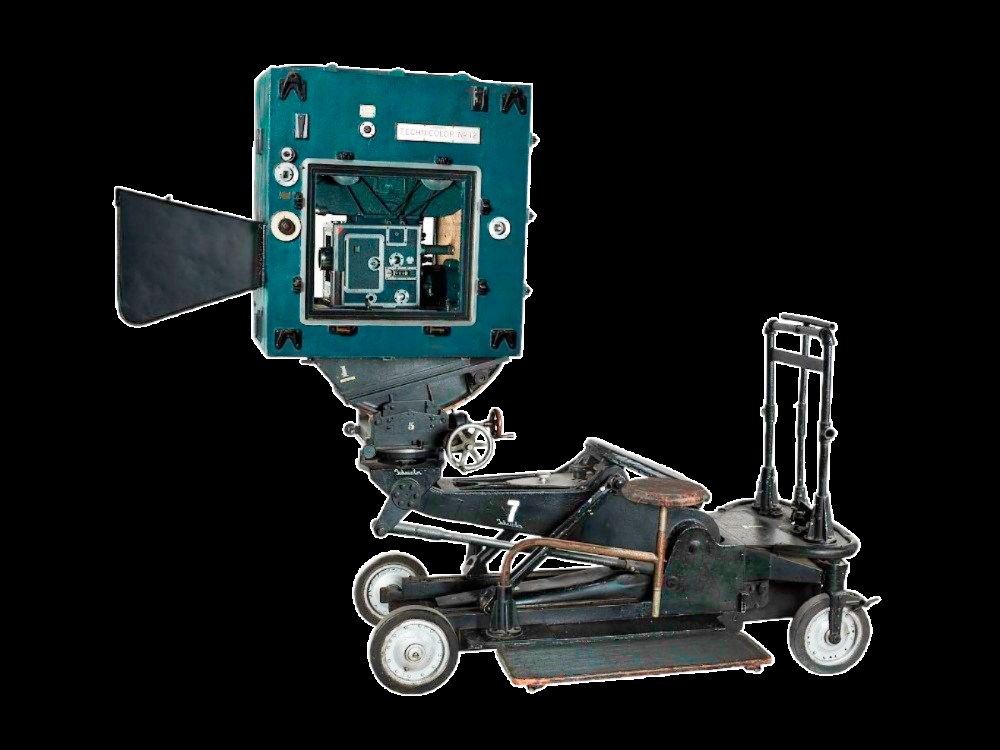
An iconic name in the cinematographic industry, Technicolor was associated with the color process used widely in many celebrated films over three decades, including "The Wizard of Oz," "Singin' in the Rain," and "Fantasia." For years, the company had been quietly transforming itself from a film–focused lab to a company providing all manner of digital services, including cinematographic digital processing and visual effects.
Like it did with Grass Valley, Thomson originally wanted to stress its own brand over Technicolor's, Thomson Technicolor, which diluted the value and meaning of the Technicolor name. The rebranding of the parent company and the refocusing of Technicolor on its heritage and not Thomson's represented a bold move on where the company thought its future lay. Also, getting rid of a too cumbersome past was certainly a consideration. Chief marketing officer Ahmad Ouri said at the time, "We chose the Technicolor name because it's most relevant to content creators and distributors." In a sign that the center of the company was shifting to Hollywood, Quri was based there. The company's new headquarters was at Sunset‐Gower Studios
Technicolor's historic core competency has been in color science; be it its original giant three‐strip film cameras and film processing, is today extended into the video digital realm, as film is no more. What once ended up on film is now a digital bitstream, a "number sequence" to digital signal processing purists.